
In hospitality, staffing problems rarely happen at a convenient time.
A team member may call in sick a few hours before a busy service. Bookings can suddenly increase. An event may require additional staff. A busy weekend can leave a venue short-handed. When this happens, hospitality operators need to find suitable staff quickly, without spending hours searching, calling agencies or compromising on the quality of service.
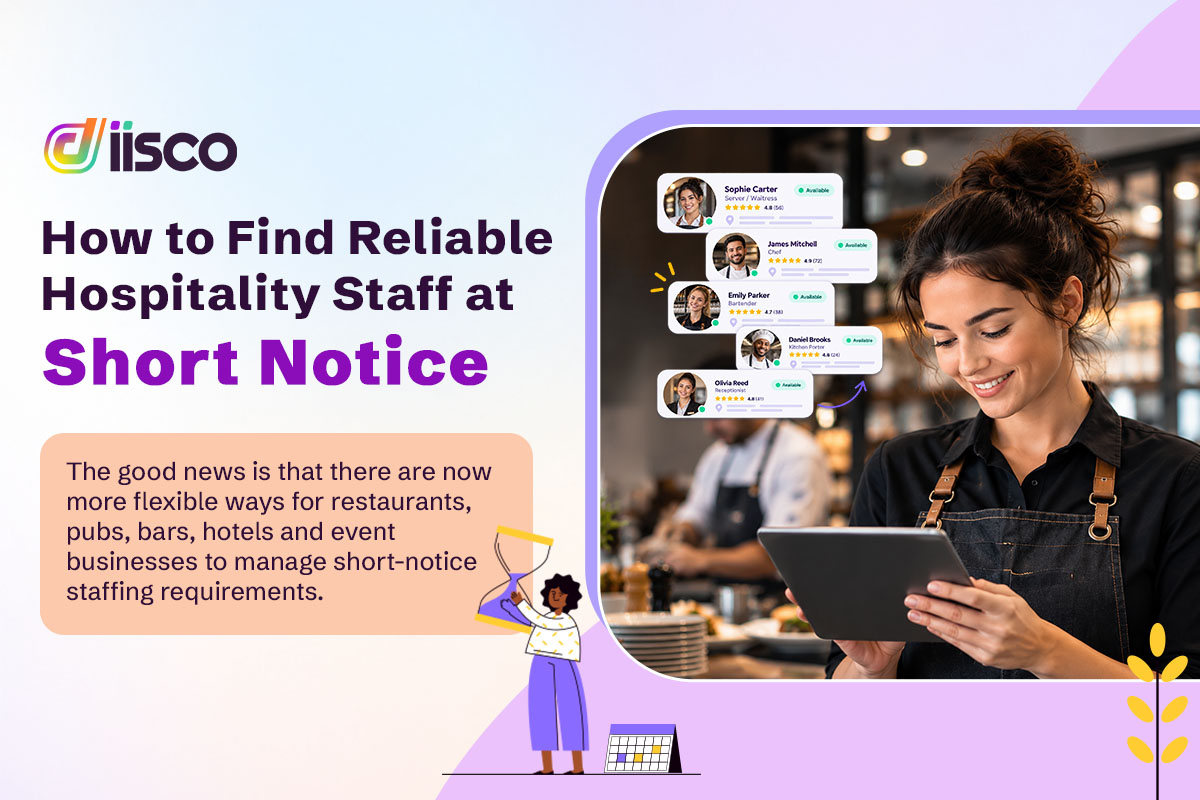
The good news is that there are now more flexible ways for restaurants, pubs, bars, hotels and event businesses to manage short-notice staffing requirements.
Why Short-Notice Hospitality Staffing Is So Difficult
Hospitality businesses operate in an environment where demand can change quickly. A staffing gap can affect:
Customer service
Waiting times
Kitchen operations
Employee workload
Revenue
Customer satisfaction
Overall service quality
The problem isn’t simply finding someone who is available. Operators need people with the appropriate experience, availability and attitude for the specific shift. This makes short-notice hospitality staffing particularly challenging.
1. Know Exactly What Staff You Need
Before looking for someone, clearly define the requirements of the shift.
Consider:
Role: waiter, bartender, chef, kitchen porter, receptionist, etc.
Date and time: When does the person need to start and finish?
Experience: Does the role require previous hospitality experience?
Location: How easily can the worker reach the venue?
Responsibilities: What will they be expected to do?
Dress code: Is specific clothing required?
Certifications: Are any qualifications or checks necessary?
A clear shift description helps attract more relevant applicants and reduces unnecessary communication.

2. Build a Flexible Staffing Pool
One of the best ways to deal with unexpected staffing shortages is to prepare before they happen.
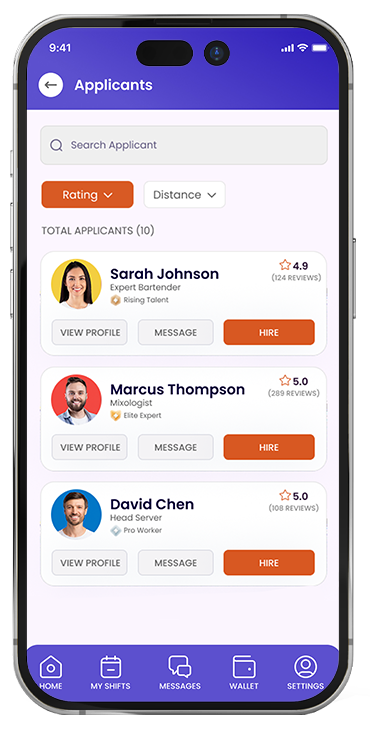
Instead of starting from zero every time someone is unavailable, hospitality operators can build a pool of workers who are familiar with their business and suitable for different types of shifts.
Keep track of workers based on:
Previous experience
Roles they can perform
Availability
Reliability
Performance
Previous shift history
Having access to a reliable pool can significantly reduce the pressure of last-minute staffing.
3. Use Technology to Reach Available Workers
Traditional recruitment methods aren’t always designed for individual shift requirements.
For a business that needs someone for one specific shift, posting a permanent vacancy may not make sense.
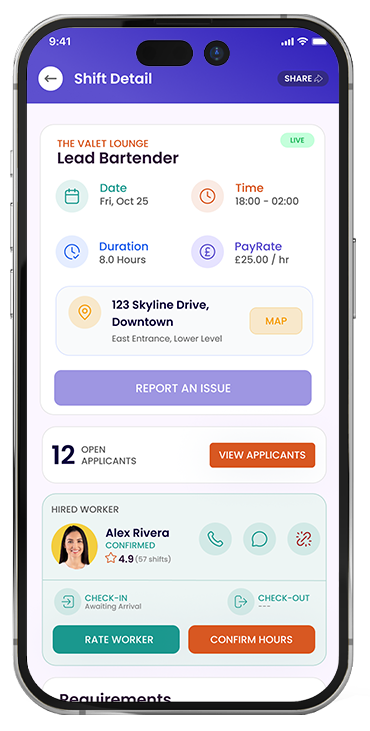
Digital hospitality staffing platforms can provide a more flexible approach by allowing venues to publish individual shifts and connect with workers looking for flexible opportunities.
Diisco is designed specifically around this type of hospitality staffing.
Venues can create shifts, receive applications, review worker profiles and ratings, communicate with applicants and select suitable workers through the platform.
The idea is to make the process more direct and reduce the time and friction involved in filling individual hospitality shifts.
4. Look Beyond Availability
When a shift needs filling urgently, it can be tempting to choose the first person who says they are available.
However, availability should only be one part of the decision.
Before confirming a worker, consider:
Experience: Have they worked in a similar role?
Reliability: Do they have a good record of completing shifts?
Skills: Do they have the skills required for the position?
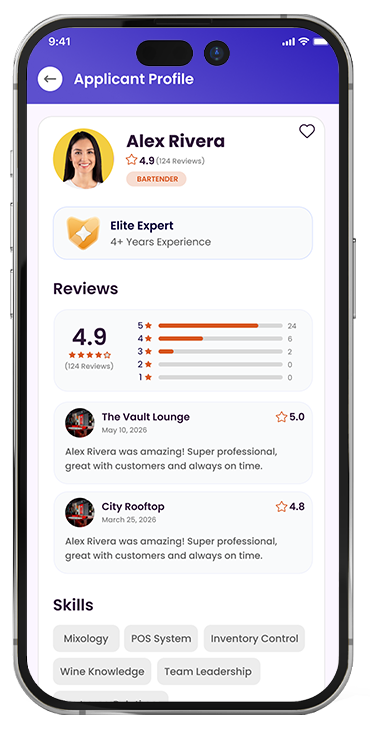
Professional reputation: Are there ratings or previous performance information available?
Location: Can they realistically arrive at the venue on time?
A quick decision doesn’t have to mean an uninformed decision.
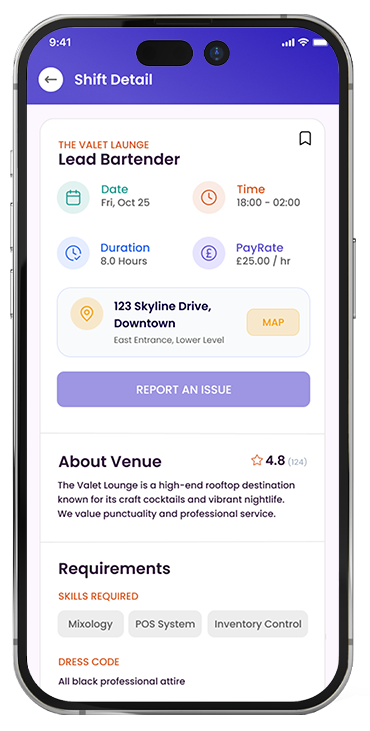
5. Make Your Shift Description Clear
A well-written shift post can help you attract more suitable workers.
Instead of simply writing:
“Waiter required tonight.”
Provide useful information such as:
Job role
Shift date
Start and finish time
Venue location
Main responsibilities
Required experience
Expected dress code
Pay information
Any important requirements
The clearer the information, the easier it is for workers to decide whether the shift is suitable.
6. Use Ratings and Profiles to Make Better Decisions
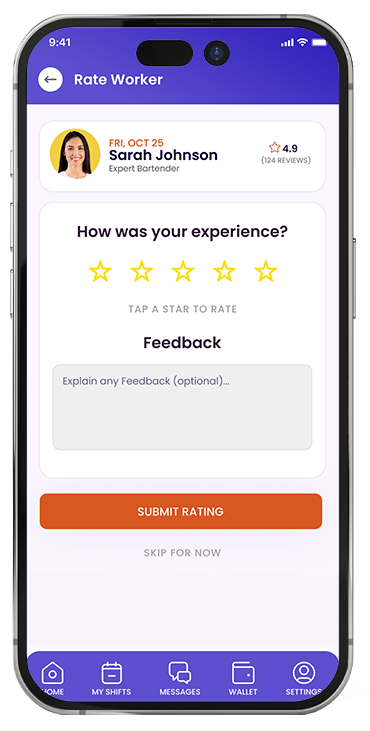
One of the advantages of digital staffing platforms is that venues can have more information when reviewing applicants.
A worker’s profile, experience and ratings can provide additional context when deciding who is suitable for a shift.
For hospitality operators, this can help move the process beyond simply asking:
“Who is available?”
to:
“Who is available and suitable?”
This distinction is particularly important when filling important shifts at busy venues.
7. Consider the Cost of Traditional Agency Staffing
Hospitality staffing agencies can be useful, particularly when businesses need recruitment support.
However, agency staffing can also involve additional fees or markups.
For businesses that regularly need short-term or individual shift cover, these additional costs can become significant over time.
This is one reason some operators are exploring direct digital staffing solutions.
Diisco’s model is designed to give hospitality venues a direct way to connect with flexible workers rather than relying on a traditional agency process for every individual shift.

8. Use AI to Make Shift Creation Faster
Speed matters when a venue has an unexpected staffing gap.
Even creating a shift post can take valuable time when done manually.
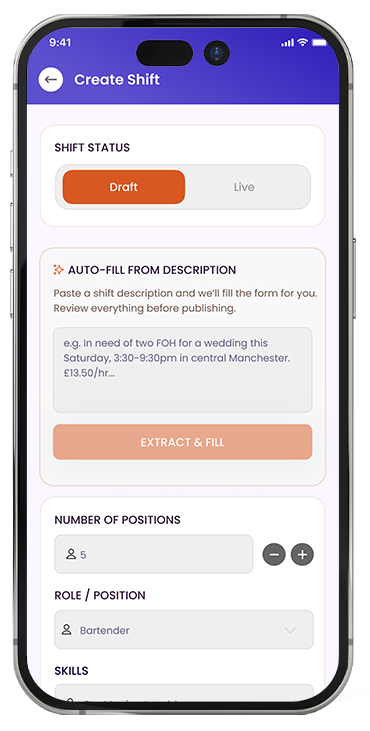
AI-powered tools can help streamline this process by assisting with the creation of structured shift information.
Diisco is developing AI-powered shift creation to help hospitality operators create and publish shifts more efficiently.
The objective is simple: reduce unnecessary administrative work so operators can spend more time managing their business.
9. Don’t Wait Until You’re Short-Staffed
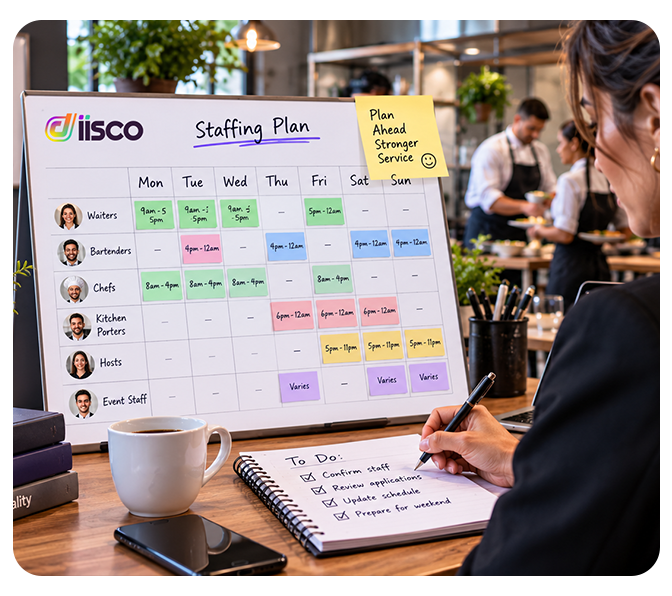
The best time to improve your staffing process isn’t when a staff member calls in sick. It’s before the problem happens.
Hospitality businesses can prepare by:
Identifying their most common staffing gaps.
Building a pool of suitable flexible workers.
Creating clear shift descriptions.
Establishing a consistent process for reviewing applicants.
Tracking worker performance and reliability.
Using technology to speed up shift creation and communication.
A proactive staffing strategy can make last-minute situations much easier to manage.
A Smarter Approach to Last-Minute Hospitality Staffing
Short-notice staffing doesn’t have to mean panic, excessive agency costs or hours spent making phone calls.
The combination of a clear staffing process, reliable worker networks and digital technology can help hospitality businesses respond more efficiently when staffing requirements change.
Platforms such as Diisco are designed to make that process simpler by connecting hospitality venues with flexible workers and providing tools to manage individual shifts digitally.
For restaurants, pubs, bars, hotels and other hospitality businesses, the future of staffing is likely to become increasingly flexible, digital and technology-driven.
Final Thoughts
Finding reliable hospitality staff at short notice will always be an important challenge for the industry.
But the way businesses solve that challenge is changing.
Instead of relying entirely on traditional recruitment or agency processes, hospitality operators can use technology to create shifts, reach flexible workers, review applicants and manage staffing requirements more efficiently.
The key is to have the right process in place before the next staffing emergency happens.
Looking for a simpler way to manage flexible hospitality staffing?
Discover how Diisco can help your venue create shifts, connect with hospitality workers and manage flexible staffing.
Visit Diisco.app to learn more.
